


Understanding Addiction: Theories That Explain the Cycle of Addiction
Addiction is a complex condition that affects how people think, feel, and relate to others. It involves biological, psychological, and social factors rather than a simple lack of willpower. Understanding the leading theories of addiction can help individuals and therapists make sense of how addictive patterns develop and how recovery becomes possible through counselling and support.
1. The Disease Model of Addiction
The disease model views addiction as a chronic brain-based condition that changes the brain’s chemistry and reward system. Over time, everyday pleasures lose their impact while dependence on the addictive substance or behaviour grows stronger. Genetics can increase vulnerability, which is why some people are more prone to addiction than others. This perspective reinforces the importance of treatment and compassionate care rather than shame or blame.
2. The Social Learning Theory
According to the social learning theory, addiction can develop through observation and social reinforcement. People may begin using substances after seeing friends, family, or peers use them, particularly if it seems to reduce stress or enhance connection. When those experiences are followed by positive emotions or acceptance, the behaviour is reinforced. Counselling and therapy often focus on identifying these patterns, building new coping skills, and creating supportive environments for recovery.
3. The Self-Medication Hypothesis
Many individuals use substances or behaviours to cope with emotional pain, anxiety, trauma, or depression. The temporary relief they feel strengthens the desire to repeat the behaviour, which can eventually lead to dependency. This theory highlights why effective treatment must address both addiction and the underlying emotional or mental health challenges. In therapy, exploring these root causes can help reduce reliance on the addictive behaviour and support long-term healing.
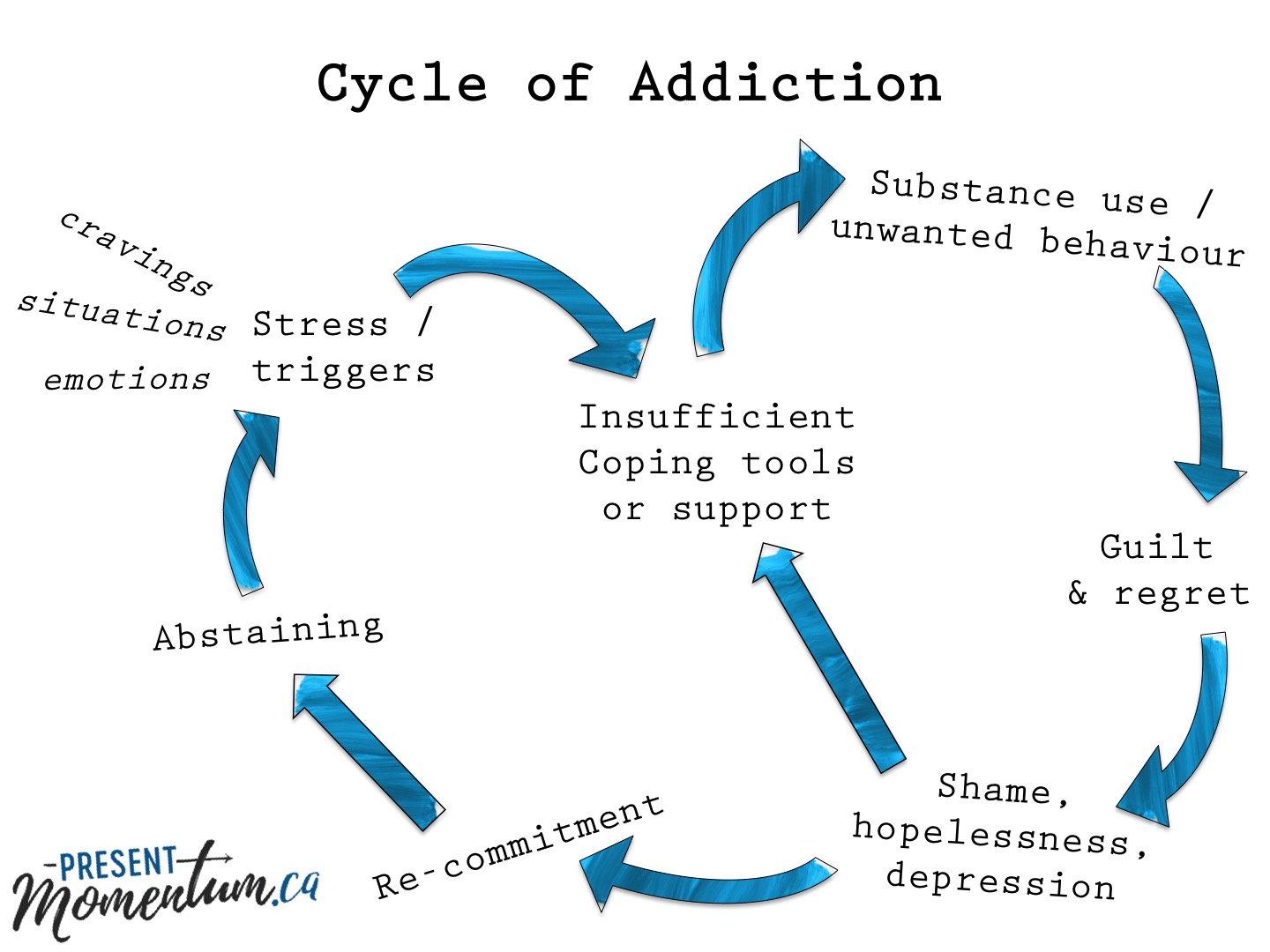
4. The Cycle of Addiction
Addiction often follows a repeating cycle that includes several key stages.
Initial Use or Curiosity: Trying a substance or behaviour due to curiosity, social pressure, or emotional need.
Positive Reinforcement: Experiencing pleasure or relief, which motivates repetition.
Tolerance and Dependence: Needing more of the substance or behaviour to achieve the same effect, and feeling discomfort or withdrawal when trying to stop.
Cravings and Consequences: Continued use despite harm to health, relationships, or work due to powerful cravings and changes in brain reward systems.
Recognizing this cycle helps explain why breaking free from addiction requires more than willpower; it often needs consistent support and therapeutic guidance.
Integrating the Theories
Each model of addiction offers valuable insight. The biological, social, and psychological perspectives together show that addiction is multifaceted and deeply human. For people seeking addiction recovery in Squamish, therapy can offer practical tools, emotional understanding, and a safe space to rebuild healthy patterns.
A Compassionate Approach to Recovery
Addiction recovery begins with understanding, not judgment. Through counselling and therapy, individuals can learn new ways to manage stress, process emotions, and reconnect with their values. With the right support, recovery is not only possible but deeply transformative.